
Seasonal travel
Where Is It Warm in Europe in February? 8 Best Winter Sun Destinations
Compare eight February winter sun destinations, from the Canary Islands to Madeira, Cyprus and Malta, with historical temperatures and practical planning tips.
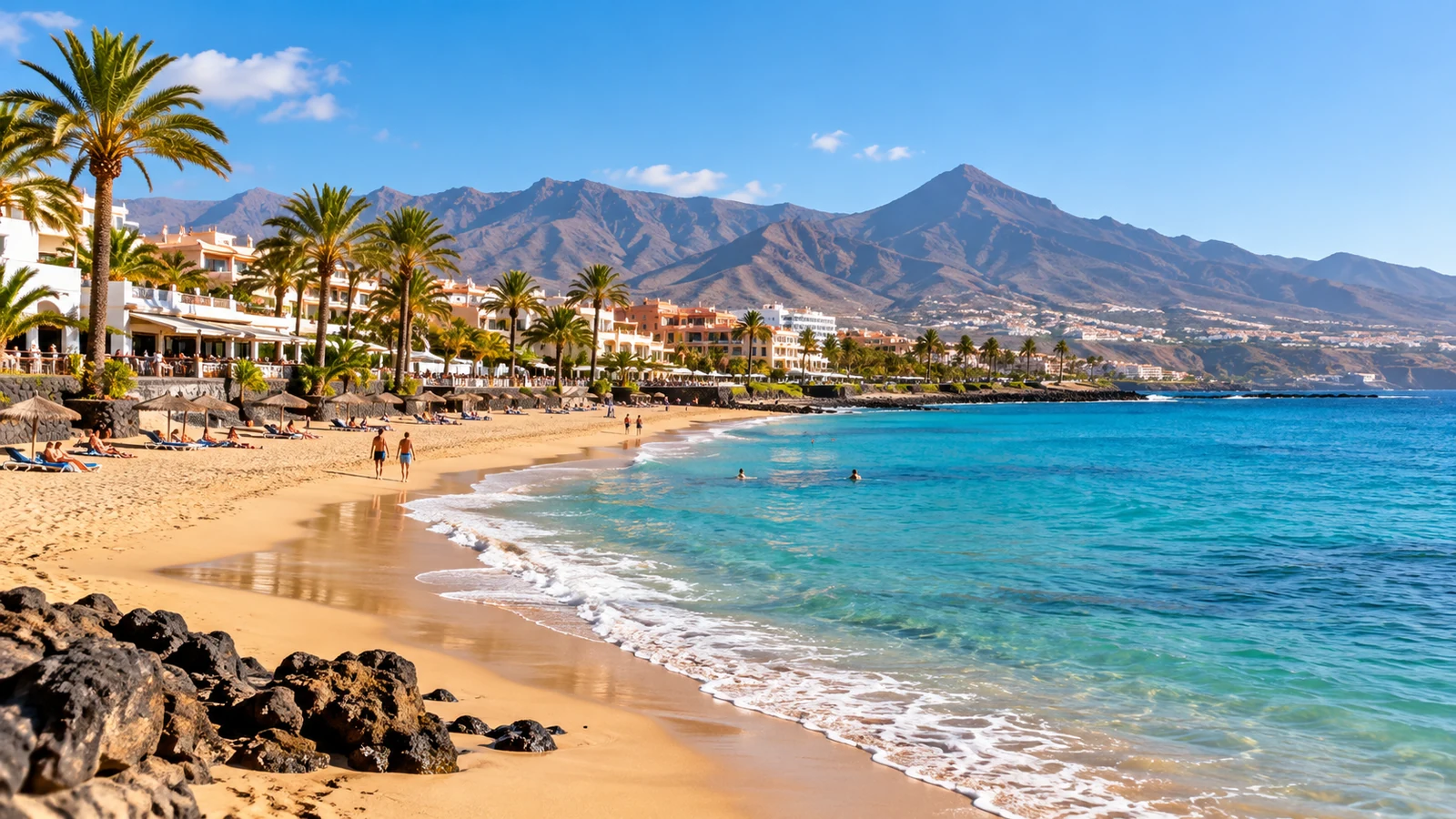
February is still winter across Europe, but the Canary Islands, Madeira and parts of the Mediterranean can offer milder conditions for a break. The historical coastal references below give average daytime highs of roughly 16°C–22°C; weather varies from day to day.
This guide breaks down where to find warmth in Europe in February, what conditions to realistically expect, how to select the right island or coastal base, and how to structure a winter escape.
Rovairo may earn a commission from partner links.
Where Is Warmest in Europe in February?
Spain’s Canary Islands, geographically off northwestern Africa, are among the warmer destinations associated with Europe in February. The representative coastal airport normals show mean daily highs around 21°C–22°C and roughly seven hours of bright sunshine per day. Rainfall totals are relatively low at these stations, but wet, windy and cloudy days still occur.
Madeira is an Atlantic island, not part of the Mediterranean basin: Funchal’s mean February high is about 20°C. Southern Cyprus, Málaga and Malta offer cooler conditions, with representative historical highs around 16°C–18°C, often suitable for sightseeing with layers and flexible outdoor plans.
Quick Comparison: February Winter Sun Destinations
Values are rounded historical averages, not forecasts or guarantees. Spanish airport normals use 1981–2010; Funchal uses 1991–2020; Malta uses Luqa’s published 1961–1990 baseline. Cyprus temperature uses Limassol port 1981–2010, while its separate official sunshine table does not specify a baseline. Airport and town references cannot describe every resort microclimate. Sunshine measures bright sunshine, not daylight; monthly totals are divided by about 28 days.
| Destination / reference | Territory / country | Mean daytime high | Daily sunshine / context | Best for |
|---|---|---|---|---|
| Tenerife South airport | Spain / Canary Islands | 22°C | About 7 hours | Coastal stays, volcanic landscapes |
| Gran Canaria airport | Spain / Canary Islands | 21°C | About 7 hours | Dunes, coastal villages |
| Lanzarote airport | Spain / Canary Islands | 21°C | About 7 hours | Volcanic scenery, art, wine |
| Fuerteventura airport | Spain / Canary Islands | 21°C | About 7 hours | Beaches, dunes, island drives |
| Funchal | Portugal / Madeira | 20°C | Sunny intervals; rain possible | Gardens, walking, coastal scenery |
| Limassol port | Cyprus | 17°C | About 7 hours | Archaeology, promenades, villages |
| Málaga airport | Spain | 18°C | About 6 hours | Museums, coastal walks, day trips |
| Luqa | Malta | 16°C | About 6 hours | Architecture, harbours, history |
1. Tenerife, Canary Islands (Spain)
Historical mean February high: About 22°C at the representative location in the comparison table.
Sea and swimming: Winter water can feel too cool for comfortable swimming for many travelers. Check beach flags, swell and local conditions; a heated pool may be a better fit if daily swimming matters.
Best Base: Costa Adeje, Los Cristianos, or Playa de Las Américas
Tenerife’s mountains create marked local climate contrasts. The southwest coast is a popular winter base, but it does not guarantee dry or clear weather. A sunny afternoon in Costa Adeje may suit a beach visit or promenade walk in light layers; bring a windproof layer as well.
Tenerife South airport’s historical mean daily minimum is about 15°C, usually reached overnight rather than at dinner time. Confirm that a resort pool is heated and open in winter. High-elevation areas of Teide National Park can be much colder, with snow, ice or access restrictions.
- Top Highlights: Consider a southwest-coast boat excursion, Barranco del Infierno or Teide National Park after checking current access, reservations and weather. Wildlife sightings are not guaranteed.
- Good to Know: South or southwest bases can suit a coastal holiday; compare the location with your itinerary rather than ruling out northern towns altogether.
2. Gran Canaria, Canary Islands (Spain)
Historical mean February high: About 21°C at the representative location in the comparison table.
Sea and swimming: Winter water can feel too cool for comfortable swimming for many travelers. Check beach flags, swell and local conditions; a heated pool may be a better fit if daily swimming matters.
Best Base: Maspalomas, Meloneras, or Puerto de Mogán
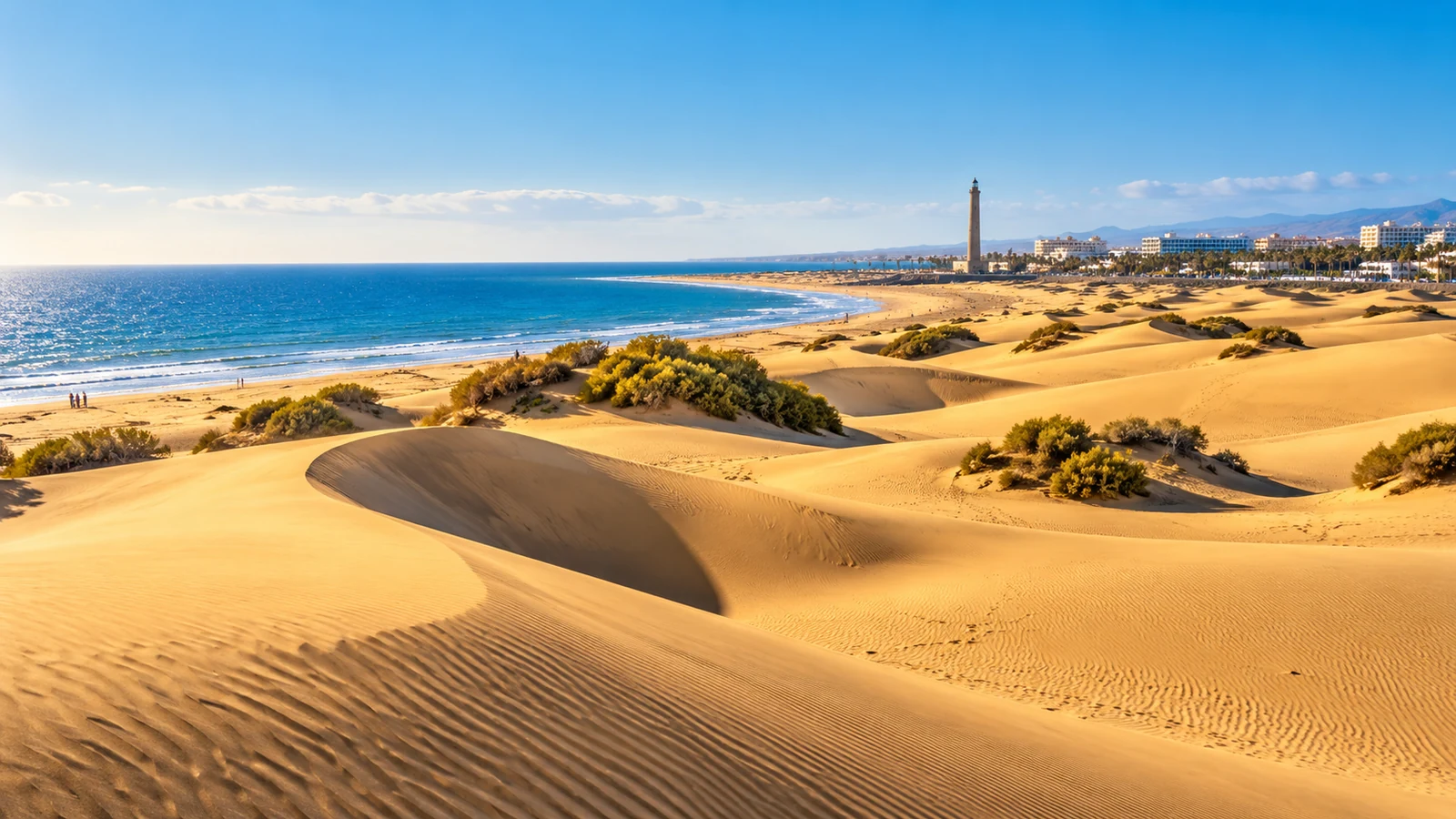
Gran Canaria combines a mountainous interior with varied coastal settings. Southern resorts can have sunny spells, but winter weather remains changeable. Maspalomas offers dune scenery beside the Atlantic, while Puerto de Mogán has a harbour setting for walks and dining.
Almond blossom may add colour around mountain villages such as Tejeda, with timing varying by year. Mountain roads are winding; allow time and check road and weather conditions instead of relying on a particular hour to avoid cloud.
- Top Highlights: Explore permitted paths at Maspalomas, browse Puerto de Mogán’s market if operating during your visit, and consider a trip to the mountain villages. The market is normally listed on Fridays; reconfirm locally before making a special journey.
- Good to Know: Airport transfer time depends on the resort, traffic and transport. The GC-1 serves the southern coastal corridor, but do not assume every resort is under 30 minutes away.
3. Lanzarote, Canary Islands (Spain)
Historical mean February high: About 21°C at the representative location in the comparison table.
Sea and swimming: Winter water can feel too cool for comfortable swimming for many travelers. Check beach flags, swell and local conditions; a heated pool may be a better fit if daily swimming matters.
Best Base: Playa Blanca or Puerto del Carmen
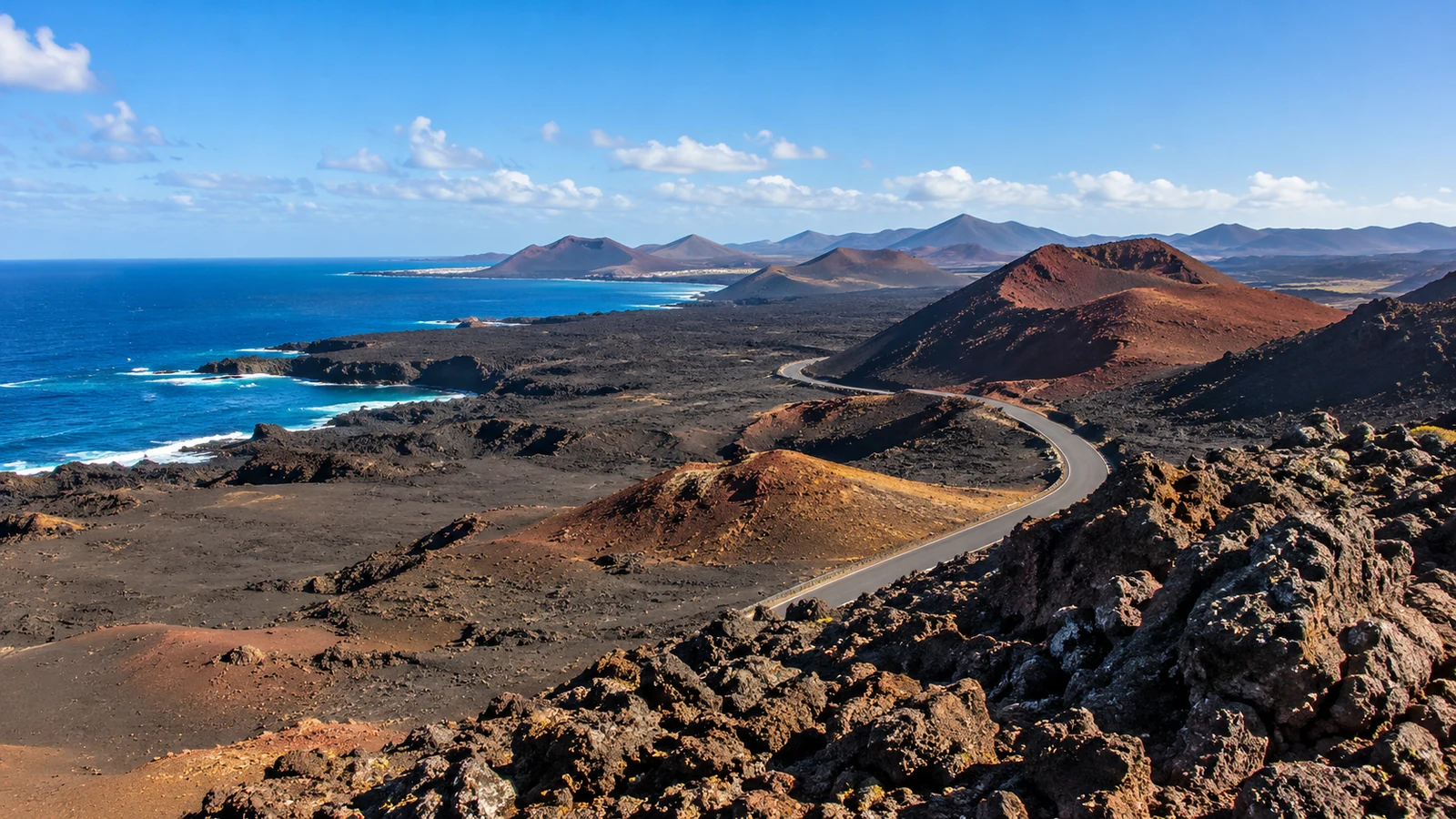
Lanzarote’s lava fields, whitewashed villages and coves make a striking winter setting. Sunny intervals can alternate with cloud, showers and coastal wind. Playa Blanca faces Fuerteventura across the Bocaina Strait; shelter depends on the beach and wind direction.
César Manrique’s influence is visible in the island’s architecture and cultural attractions. In La Geria, vines grow in hollows in volcanic soil with stone windbreaks. Follow designated paths and check winery visiting arrangements.
- Top Highlights: Timanfaya National Park, Jameos del Agua and Papagayo’s bays; check opening, booking and local access requirements for your dates.
- Good to Know: Pack a windproof layer for exposed coastal walks.
4. Fuerteventura, Canary Islands (Spain)
Historical mean February high: About 21°C at the representative location in the comparison table.
Sea and swimming: Winter water can feel too cool for comfortable swimming for many travelers. Check beach flags, swell and local conditions; a heated pool may be a better fit if daily swimming matters.
Best Base: Corralejo (north) or Morro Jable (south)
Fuerteventura offers broad sandy beaches and open volcanic landscapes. February’s airport normals indicate mild days and relatively low monthly rainfall, but wind, showers and swell can affect beach plans. The Jandía Peninsula and the northern coast provide different settings; neither guarantees calm conditions.
The dune landscape outside Corralejo is a highlight, with views toward Isla de Lobos in suitable visibility. Keep to permitted areas and allow time for the distances between bases.
- Top Highlights: Corralejo Natural Park, coastal walks near Sotavento, and a possible Isla de Lobos visit. Check the Cabildo’s access-authorisation requirements as well as the boat operator’s sailing-day schedule and sea conditions.
- Good to Know: A car can be useful beyond resort areas, but buses, transfers or organized excursions may suit your plans. Check route conditions; not every road or beach access is straightforward.
5. Madeira, Portugal
Historical mean February high: About 20°C at the representative location in the comparison table.
Sea and swimming: Winter water can feel too cool for comfortable swimming for many travelers. Check beach flags, swell and local conditions; a heated pool may be a better fit if daily swimming matters.
Best Base: Funchal or Ponta do Sol
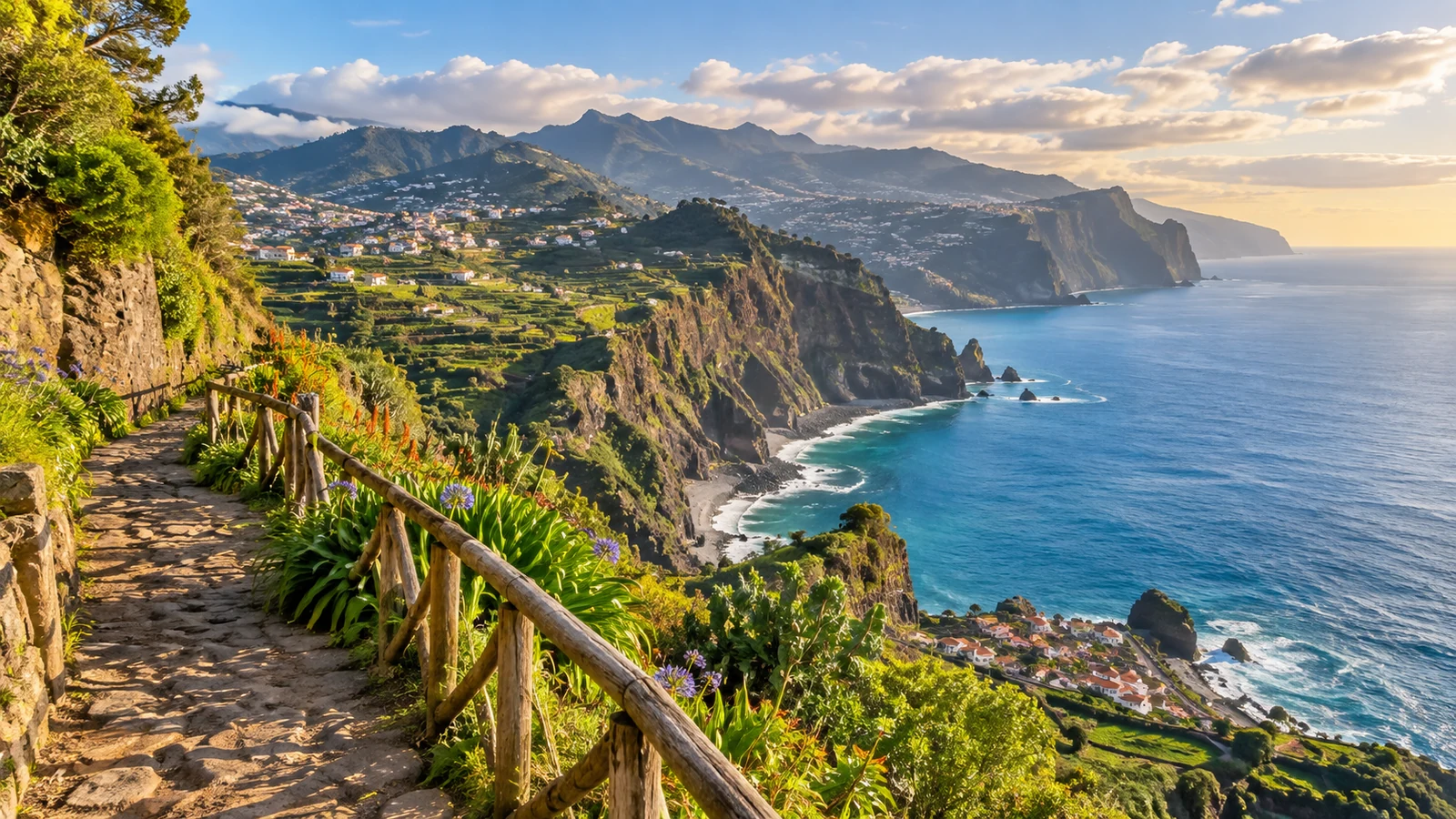
Madeira offers greenery and mild coastal conditions rather than guaranteed beach weather in February. Funchal has a historical mean daytime high near 20°C and mean daily minimum near 14°C. Mountains and exposed coasts can be colder, wetter or windier.
Levada and coastal walking can be rewarding when the chosen route is accessible and conditions are suitable. Weather, maintenance, closures and booking requirements can change access: check the official Visit Madeira trail page before setting out. Ponta do Sol is a south-coast alternative, with sunshine depending on weather, aspect and shade; it is not treated here as a verified sunshine record-holder.
- Top Highlights: Consider Caldeirão Verde only if its current trail status and booking conditions permit. Check the Funchal cable car and Monte Palace visiting information separately. At Porto Moniz, confirm bathing-complex opening and sea conditions; access does not imply warm water.
- Good to Know: Much of the coast is rocky, with bathing platforms and lidos. Confirm pool heating rather than assuming it.
6. Southern Cyprus (Paphos & Limassol)
Historical mean February high: About 17°C at the representative location in the comparison table.
Sea and swimming: Winter water can feel too cool for comfortable swimming for many travelers. Check beach flags, swell and local conditions; a heated pool may be a better fit if daily swimming matters.
Best Base: Paphos, Limassol, or Larnaca
Cyprus offers mild coastal sightseeing conditions in February, rather than a verified regional warmth record. Limassol’s temperature normals round to a mean high of 17°C and low of 8°C. The official coastal sunshine reference is about seven hours per day, an average that includes dull and rainy days.
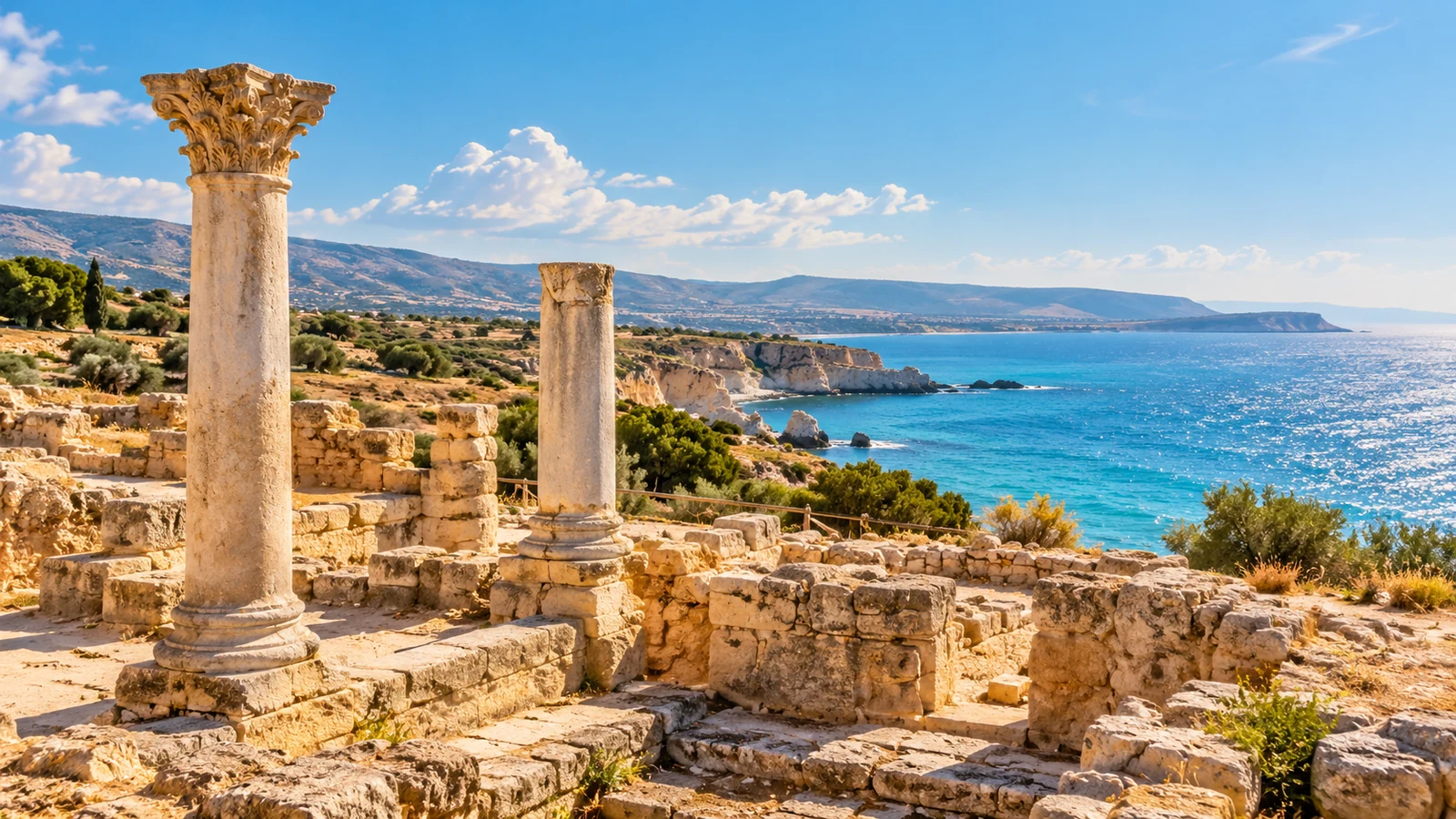
For most visitors this is a cultural trip rather than a swimming holiday. Kato Paphos Archaeological Park, the Tombs of the Kings and Kourion are options for outdoor exploration when weather and opening arrangements allow. Crowd levels vary; check winter hours and admission details before visiting.
- Top Highlights: Paphos mosaics, Limassol’s Molos promenade and foothill villages, with attraction and winery visits checked in advance.
- Good to Know: Rain is possible and inland elevations can be substantially colder. Coastal overnight averages are not a guide to conditions in the Troodos Mountains.
7. Costa del Sol, Spain
Historical mean February high: About 18°C at the representative location in the comparison table.
Sea and swimming: Winter water can feel too cool for comfortable swimming for many travelers. Check beach flags, swell and local conditions; a heated pool may be a better fit if daily swimming matters.
Best Base: Málaga, Marbella, or Nerja
Málaga airport’s February normal gives a mean daily high of about 18°C, a mean daily low of about 8°C and roughly six hours of bright sunshine per day. The month also has measurable rainfall; a sunny terrace afternoon is a possibility, not a promise.
Málaga pairs coastal walks with the Picasso Museum, Centre Pompidou and the Alcazaba. A car or organized excursion can help with inland visits to Ronda or the white villages. For Caminito del Rey, check official ticket availability, access rules and closure notices; weather and safety decisions can affect operation.
- Top Highlights: Málaga’s Alcazaba and Gibralfaro, Marbella’s old town and Nerja’s coastal viewpoints, subject to current visiting information.
- Good to Know: Mountain conditions can be colder than the coast. Pack warmer layers and check your route before inland trips.
8. Malta & Gozo
Historical mean February high: About 16°C at the representative location in the comparison table.
Sea and swimming: Winter water can feel too cool for comfortable swimming for many travelers. Check beach flags, swell and local conditions; a heated pool may be a better fit if daily swimming matters.
Best Base: Valletta, Sliema, or Victoria (Gozo)
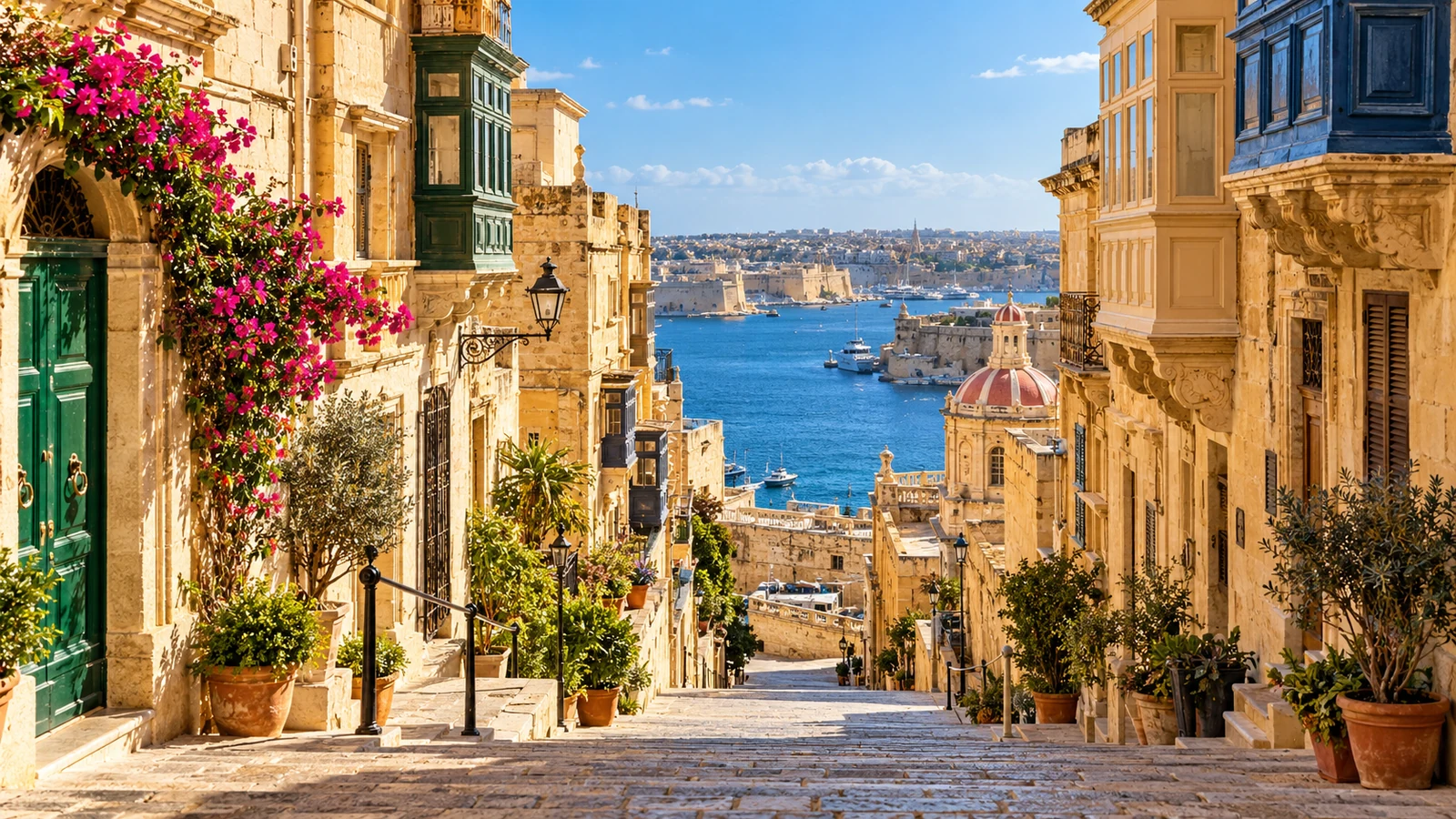
Malta offers a historical city break with changeable winter conditions. Luqa’s published older baseline gives a rounded February mean high of 16°C, low of 9°C and around six sunshine hours per day. Valletta, Mdina and the Three Cities can suit walking when weather allows; quiet streets are not guaranteed.
Gozo’s rural landscape can be green after winter rain. Plan the crossing using the operator’s timetable for your travel date, including time to reach the port and board. Wind or operational changes can disrupt services, and exposed coastal paths require suitable conditions.
- Top Highlights: St. John’s Co-Cathedral, Upper Barrakka Gardens, Mdina and Gozo’s coastal scenery, with opening times and trail conditions checked individually.
- Good to Know: Bring a wind-resistant coat for ferry crossings and harbour viewpoints.
What to Pack for a February Winter Sun Trip
Pack for mild coastal afternoons as well as cool evenings, rain and exposed locations. Mountain weather can differ sharply from the seaside.
- Light layers: Comfortable shirts and trousers that can be layered for changing conditions.
- Evening wear: A warm sweater or jacket; overnight averages do not predict the temperature at a particular dinner reservation.
- Footwear: Supportive walking shoes for cobbles and paths; choose footwear for the actual trail conditions.
- Sun protection: Bring a hat, sunglasses and sunscreen, and check the local UV guidance. Do not assume a fixed winter UV category for every island or day.
- Swim gear: If swimming is important, confirm pool heating and winter opening. Follow local safety guidance at coastal bathing sites.
Compare rental cars with DiscoverCars →
Use the Rovairo Currency Converter to estimate your budget, then check your provider’s actual conversion rate and fees.
Our Travel Tools guides explain practical options for activities, connectivity and getting around.
Frequently Asked Questions
Can you swim in the sea in Europe in February?
Many travelers find winter sea water too cool for comfortable casual swimming. Comfort is subjective, and safety also depends on wind, swell, currents and local guidance. If daily swimming is central to your holiday, confirm a heated pool and its winter opening.
Which European island is warmest in February?
The Canary Islands are among the warmer destinations associated with Europe. Representative airport normals give February mean daily highs around 21°C–22°C; a sheltered resort may feel different, and no location guarantees sunshine.
How many days do you need for a February winter sun trip?
Five to seven days can work well for one island or coastal base. Consider ten to fourteen days if you want a slower pace or several bases, allowing flexibility for weather and transport.
Do you need a rental car for winter sun destinations?
Walking, public transport and transfers can work well for city-based trips such as Valletta or Málaga. A car can be useful for rural or dispersed sights, but compare parking, road conditions and driving costs with excursions or local transport. Driving elsewhere does not guarantee better weather.
Plan Your Winter Getaway with Rovairo
Choose a destination that matches your expectations, then build a flexible itinerary around winter conditions. Rovairo can help you compare flight options, research accommodation and plan your days.
Compare timing with the January winter sun guide and December guide, or explore the broader best winter sun destinations in Europe overview.
Sources and Verification
General planning suggestions are editorial advice. Check live prices, weather, schedules, access and local rules for your dates.
- AEMET — Tenerife South airport, 1981–2010 February means: daily high 22.0°C, daily low 15.0°C, 195 monthly sunshine hours and 20 mm rainfall. These station averages are not a forecast.
- AEMET — Gran Canaria airport, 1981–2010 February means: daily high 21.2°C, daily low 15.0°C, 191 monthly sunshine hours and 24 mm rainfall. These station averages are not a forecast.
- AEMET — Lanzarote airport, 1981–2010 February means: daily high 21.3°C, daily low 14.3°C, 201 monthly sunshine hours and 18 mm rainfall. These station averages are not a forecast.
- AEMET — Fuerteventura airport, 1981–2010 February means: daily high 21.0°C, daily low 14.8°C, 190 monthly sunshine hours and 16 mm rainfall. These station averages are not a forecast.
- AEMET — Málaga airport, 1981–2010 February means: daily high 17.7°C, daily low 8.2°C, 180 monthly sunshine hours and 60 mm rainfall. These station averages are not a forecast.
- IPMA — Funchal 1991–2020 February mean daily high 19.9°C and mean daily low 13.9°C. Funchal does not represent mountain conditions.
- Cyprus Department of Meteorology — temperature normals Limassol New Port station, 1981–2010. February five-day normals support rounded daily high 17°C and low 8°C.
- Cyprus official coastal climate reference Limassol February daily sunshine 6.8 hours and 9.7 days with rain. This separate historical table does not state its reference period.
- Malta NSO — The Climate of Malta Luqa 1961–1990, figure 20: February daily high 15.5°C, daily low 9.3°C, 171 monthly sunshine hours and 61 mm rainfall. This is an older historical baseline.
- Visit Madeira — official hiking information Check the chosen trail’s current status, booking requirements and access conditions; weather and safety can change availability.
- Fuerteventura Cabildo — Isla de Lobos authorisation Official access-authorisation guidance. Confirm current requirements and boat arrangements separately.
- Puerto de Mogán — market information Lists the municipal market on Fridays. Confirm local changes before planning a special journey.
- Gozo Channel — ferry timetable Use the timetable and service notices applicable to your travel date. The currently displayed timetable is not a guarantee of future February departures.
- Caminito del Rey — official visitor guidance Check tickets, access rules, weather information and closure notices before travel.
Plan the next step
Explore destination guides · Build an AI itinerary · Flight Search · Hotel Search
On the homepage, choose the matching Flights or Hotels tab to start your search.