
Travel guides
Smart Travel Money: How to Pay, Convert Currency, and Avoid Bad Exchange Rates Abroad
Learn how to manage travel money abroad. Understand dynamic currency conversion, compare ATM fees, and choose between cards and cash.

Managing money while traveling used to mean carrying thick envelopes of cash, buying traveler's checks, or paying high foreign transaction fees to your local bank.
Today, multi-currency accounts and contactless payments can make spending abroad easier. Exchange-rate markups, ATM charges and conversion prompts can still add to costs; there is no single percentage of a travel budget that all travelers lose.
This guide details how to structure travel money, when to use cards versus cash, and how to avoid avoidable payment fees abroad.
Plan flights and research accommodation for your upcoming trip on Rovairo: Rovairo
Travel Money Strategy at a Glance
| Payment Method | Primary Use Case | Fee Risk | Safety Level | Best Practices |
|---|---|---|---|---|
| Multi-Currency Debit Card | Daily dining, transit, general retail | Varies: conversion and account fees | In-app lock if supported | Compare conversion timing and fees |
| Travel Credit Card | Hotel check-ins, rental cars, major purchases | Check foreign fees and interest | Protections depend on card and law | Normally choose local currency; check terms |
| Local ATM Cash Withdrawal | Taxis, markets, street food, small tips | Moderate (ATM fees) | Moderate (risk of physical loss) | Use official bank ATMs; decline conversions |
| Airport Currency Kiosk | Emergency minimal cash | Varies: compare rate and fees | Moderate | Compare total quotes; buy only what you need |
The Golden Rule: Always Pay in the Local Currency
What is Dynamic Currency Conversion (DCC)?
Dynamic Currency Conversion (DCC) is an optional offer to bill an overseas purchase or ATM withdrawal in your home currency. The DCC provider sets the conversion rate and may add fees or a markup. Compare the disclosed total with your own card terms; no universal DCC markup applies.
When a card terminal in Rome, Tokyo, or Mexico City presents the option:
- Charge in USD / EUR / GBP
- Charge in EUR / JPY / MXN
Normally select the local currency and decline DCC, after checking your card’s terms. This avoids the terminal provider’s conversion, but does not guarantee the lowest total cost for every card.
Selecting your home currency accepts the DCC provider’s conversion. Without DCC, your card network or issuer generally handles conversion under your card agreement. Network rates are not necessarily the mid-market or interbank rate, and issuer fees can still apply.
How to Handle Foreign Exchange Rates
The mid-market rate is the midpoint between quoted buying and selling rates at a particular time. It is a comparison benchmark, not a guaranteed consumer exchange rate. Compare the amount of local currency you receive after all fees, including any exchange-rate spread.
Illustrative example only — not current rates or typical provider prices. Assume you are buying €1 with USD, before any separate fees:
Hypothetical benchmark: $1.08 for €1.
Hypothetical quote A: $1.13 for €1, about 4.6% above that benchmark.
Hypothetical quote B: $1.22 for €1, about 13% above that benchmark.
To minimize conversion losses:
- Monitor the mid-market rate before departure to understand the baseline value; rates move and your transaction may settle at a different rate.
- Compare cash quotes before buying. A small arrival reserve may be useful, but compare the total cost of advance cash, an ATM withdrawal and card payment instead of assuming one is always cheapest.
- Compare transparent providers using their total quoted cost, conversion fees and any account or card charges. A mid-market rate alone does not mean a transaction is free.
Why travelers use Wise
- Spend in 40+ currencies and use the card across 150 countries and territories, subject to availability and acceptance.
- Wise generally uses the mid-market exchange rate and shows conversion fees before you confirm a conversion. Currency-specific exceptions can apply.
- If you already hold enough of the spending currency, no currency conversion is required.
- Where supported, Smart Conversion can automatically select an available balance with the lowest conversion fee.
- Digital cards and supported mobile wallets can make travel payments convenient.
- Card freezing and transaction controls are available in the app.
Fees, ATM allowances and availability vary by country. Check the current terms for your card and location; Wise is not completely fee-free.
Rovairo may earn a commission from partner links.
When to Use Credit Cards vs. Debit Cards
Matching your card to the transaction can help manage fees and temporary holds. Acceptance, protection and charges depend on the card, merchant and applicable rules.
Use a Travel Credit Card For:
- Hotel Check-ins: Hotels may reserve money for incidentals. A debit-card hold reduces your available balance; a credit-card hold reduces available credit. Ask about the amount, accepted cards and release timing before arrival.
- Car Rentals: Rental car suppliers frequently require a credit card in the primary driver’s name for security deposits. Compare rental cars with DiscoverCars →, and verify the supplier’s deposit requirements before arriving at the pickup counter. (Affiliate disclosure: Rovairo may earn a commission from partner bookings.)
- Major Purchases: Compare dispute rights and fraud protection under your card agreement and local law. Credit and debit protections differ by jurisdiction; neither guarantees reimbursement for every disputed payment.
Use a Multi-Currency Debit Card For:
- Daily Dining and Cafes: A multi-currency debit card can be convenient where accepted. Check conversion fees and other charges rather than assuming every tap is fee-free.
- Public Transit: Use contactless payment where the transport operator accepts your card, and check its fare and card-use instructions.
- ATM Cash Withdrawals: A low-fee debit card is often suitable. Credit-card withdrawals commonly count as cash advances with fees and interest starting immediately; consult your own agreement before using one.

Smart ATM Strategies Abroad
Some small businesses and local services require cash. Check your destination’s payment practices and carry only what you can safely manage.
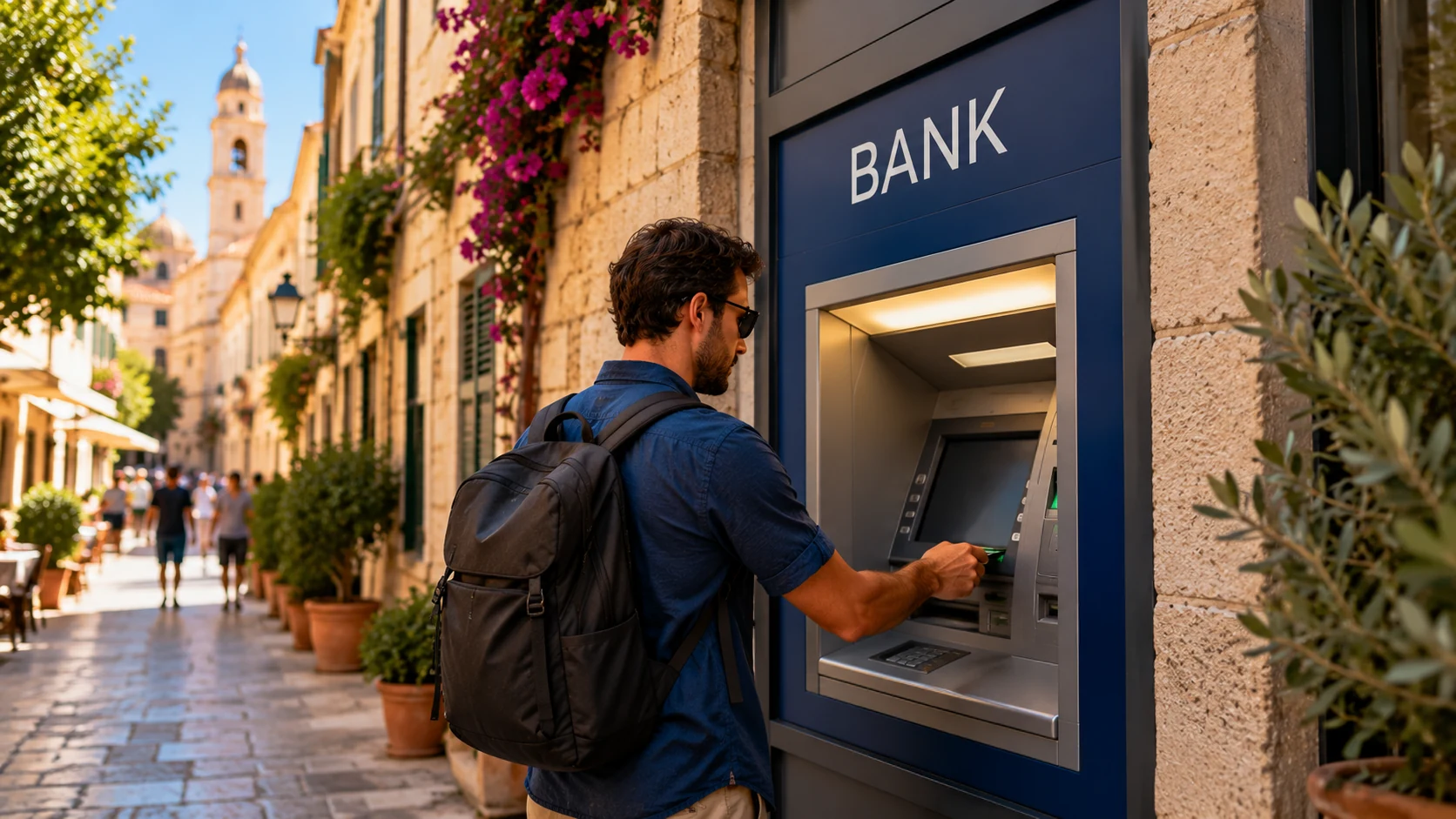
- Compare ATM Charges: Both independent and bank-operated ATMs may charge fees or offer DCC. Read the on-screen total and your issuer’s fee schedule; cancel before confirming if the cost is unsuitable.
- Use Bank-Affiliated ATMs: An ATM at an open branch can make it easier to seek help. Bank affiliation does not guarantee lower fees or freedom from tampering. Inspect the machine and shield your PIN.
- Decline "With Conversion": To avoid the ATM provider’s conversion, choose Decline Conversion or Without Conversion, while retaining a withdrawal in local currency. Your card’s conversion terms and withdrawal fees can still apply; cancel if the choices are unclear.
- Withdraw Less Frequently in Larger Amounts: Where a flat fee applies, fewer withdrawals may reduce that component. For illustration only, a hypothetical $5 fee on two withdrawals totals $10. Balance this against percentage fees, limits and the risk of carrying more cash.
Practical Money Security Rules on the Road
Losing access to money abroad can derail an itinerary. These precautions can help:
Plan how you will get online before departure; our Airalo eSIM guide explains device compatibility and practical connectivity checks.
- Separate Cards Physically: Never carry all debit and credit cards in the same wallet or phone case. Leave a backup card inside the hotel safe or an inner compartment of your primary luggage.
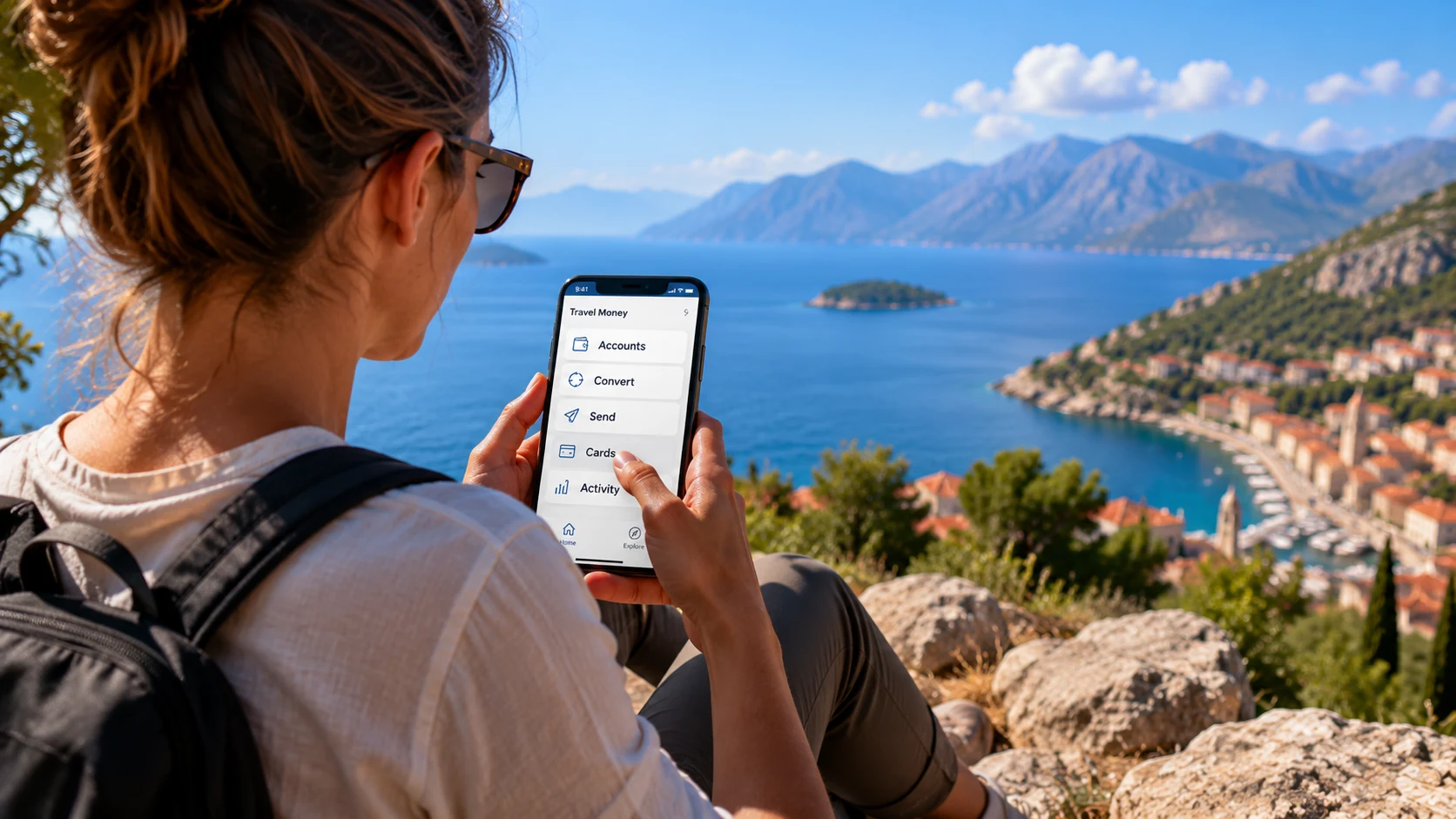
- Enable In-App Freezes: If supported, lock a misplaced or retained card promptly and contact the issuer through its official app or number. A freeze does not replace reporting loss or unauthorized transactions.
- Notify Your Bank of Travel Plans: Check whether your issuer requests a travel notice and ensure your contact details and account access work abroad.
- Keep a Small Cash Reserve: Carry an amount of locally usable cash suited to your arrival needs. Do not assume USD, EUR or GBP will be accepted everywhere.
Build your travel itinerary, compare flight routes, and coordinate your next journey on Rovairo: Rovairo
Frequently Asked Questions
Should I exchange currency before leaving home?
Compare advance cash quotes with your card’s purchase and ATM costs, including operator charges. A small reserve may help on arrival. Neither an airport ATM nor a bank counter is automatically the cheapest option.
What is a foreign transaction fee?
A foreign transaction fee is an issuer charge that may apply to foreign-currency purchases or cross-border transactions, depending on the agreement. Some cards waive it; others do not. A card advertised without this fee can still have conversion, ATM, cash-advance or annual charges. Paying in your home currency does not necessarily avoid a cross-border fee.
What should I do if an overseas ATM swallows my card?
Freeze the card if your app supports it and contact the issuer promptly using official contact details. Ask the bank operating the ATM for help if the branch is open, but do not rely on retrieval. Follow your issuer’s advice on cancellation or replacement and use your backup payment method.
Plan Your Travel Budget Confidently
Smart payment habits can reduce avoidable costs. Compare your payment tools, normally choose local-currency billing after checking your terms, and review ATM charges before withdrawing cash.
Choose the Flights or Hotels tab on the homepage to start your search.
Sources
General planning suggestions are editorial advice. Check live prices, weather, schedules, access and local rules for your dates.
- Visa: Dynamic Currency Conversion DCC is optional; compare the displayed rate and fees with your card terms.
- Visa: Foreign Exchange Visa supplies network conversion rates; these are not a universal promise of the mid-market rate.
- Wise card fees Conversion and ATM charges depend on currency and regional terms.
- Wise pre-authorisations Hotels and rental companies may temporarily reserve funds.
- CFPB: Cash advances US consumer guidance explains cash-advance fees and interest; check your own agreement.
- CFPB: ATM fees Issuer and operator charges may both apply; US disclosure rules are not presented as worldwide law.
- CFPB: Credit card fee disclosures US rules distinguish foreign-currency and cross-border purchase fees; actual charges depend on the card agreement.
- DiscoverCars: Pickup requirements Check the supplier’s accepted cards and main-driver deposit requirements.
- Wise card features Currency coverage, digital-card and mobile-wallet support, and app controls; regional eligibility and terms apply.
- Wise account and Smart Conversion Mid-market conversion and automatic selection of the balance with the lowest conversion fee, subject to regional and currency restrictions.
Plan the next step
Explore destination guides · Build an AI itinerary · Flight Search · Hotel Search
On the homepage, choose the matching Flights or Hotels tab to start your search.